
Nurturing the Seeds of Justice: How Legal Awareness and Community Socialization Shape Youth Moral Development
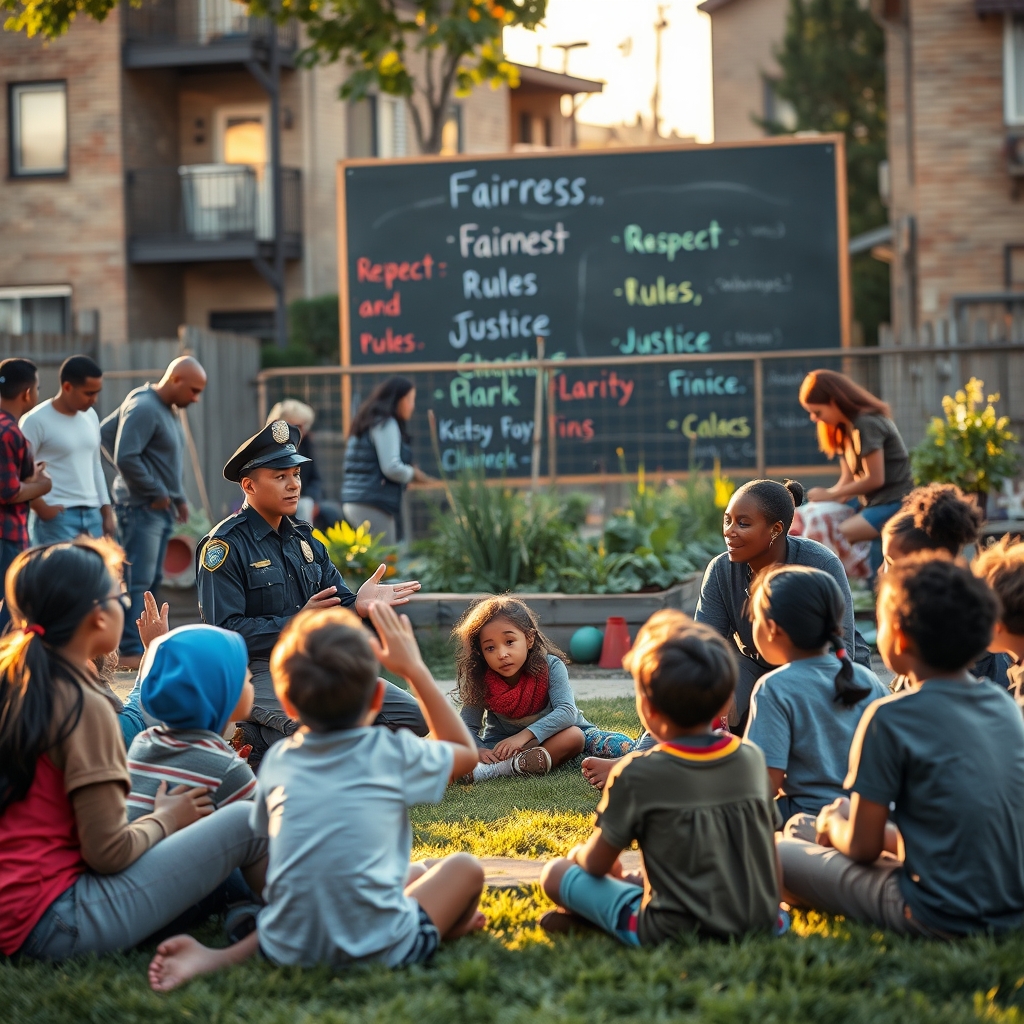
The journey toward a just society begins long before a child steps into a courtroom or interacts with law enforcement. It starts in the quiet moments of childhood—when a parent explains why rules exist, when a teacher mediates a dispute fairly, or when a community rallies to protect its most vulnerable members. These early experiences shape not just how young people perceive the law, but how they internalize its values, resist its injustices, and ultimately contribute to its evolution. The intersection of legal awareness cultivation and community socialization offers a powerful lens through which we can understand how youth develop their moral compasses and their trust in institutions.
The Foundations of Legal Awareness
Legal awareness is more than just knowing the letter of the law; it is about understanding its spirit, its purpose, and its limitations. For children and adolescents, this awareness often begins in the home, where authoritative parenting styles play a crucial role. Unlike authoritarian approaches that rely on fear and punishment, authoritative parenting balances structure with empathy, explaining the reasoning behind rules rather than imposing them arbitrarily. This approach fosters a sense of procedural justice—an understanding that rules are not just about control, but about fairness and mutual respect.
Research in developmental psychology suggests that children raised in environments where rules are consistently and fairly applied are more likely to internalize normative behaviors. They learn to see the law not as an external force to be feared or manipulated, but as a framework that protects and empowers. This internalization is critical, as it lays the groundwork for consensus-based compliance later in life. When young people believe that the law is legitimate, they are more likely to comply with it voluntarily, even when no one is watching.
The Role of Schools in Legal Socialization
While the home is the first classroom of legal awareness, schools serve as the next critical arena. School-based discipline systems, when designed with fairness and restorative justice in mind, can reinforce the lessons of procedural justice. Programs that emphasize mediation, conflict resolution, and peer accountability teach students that justice is not just about punishment, but about repair and reconciliation. These experiences help shape prosocial behavior, encouraging young people to consider the impact of their actions on others and on their communities.
However, not all school discipline systems are created equal. Coercive socialization models—those that rely heavily on suspensions, expulsions, and zero-tolerance policies—can undermine trust in institutions and contribute to legal cynicism. When students perceive discipline as arbitrary or disproportionately harsh, they are more likely to develop a distrust of authority figures, including police, teachers, and even their peers. This cynicism can have long-term consequences, eroding the very foundations of institutional legitimacy that societies rely on to maintain order and cohesion.
The Impact of Peer Influence and Victimization
Peer dynamics add another layer of complexity to youth legal reasoning. Adolescents are highly attuned to the behaviors and attitudes of their peers, and this influence can either reinforce or undermine the lessons of legal awareness. In environments where rule-breaking is normalized or even glorified, young people may struggle to reconcile their personal values with the expectations of the law. Conversely, peer groups that prioritize empathy, accountability, and community engagement can amplify the effects of positive socialization, creating a ripple effect that extends beyond individual behavior.
Childhood victimization further complicates this landscape. Young people who experience trauma—whether through abuse, neglect, or exposure to violence—often develop a heightened sensitivity to injustice. For some, this leads to a deep commitment to child protection advocacy, as they seek to prevent others from suffering as they have. For others, it fosters a sense of disillusionment, where the law is seen as either ineffective or complicit in their suffering. These divergent outcomes highlight the importance of trauma-informed interventions that address not just the legal, but the emotional dimensions of justice.
Community as the Crucible of Trust
Communities play a pivotal role in shaping youth perceptions of the law. When local institutions—schools, police departments, social services—operate with transparency, accountability, and a genuine commitment to the well-being of young people, they foster a sense of institutional legitimacy. This legitimacy is not just about compliance; it is about belief. Young people who grow up in communities where the law is seen as a force for good are more likely to engage with it constructively, whether as advocates, policymakers, or simply as responsible citizens.
Police-youth interventions, when designed thoughtfully, can serve as a bridge between communities and the legal system. Programs that prioritize dialogue, mentorship, and mutual respect—rather than punitive measures—can help demystify law enforcement and build trust. These interactions are particularly important for marginalized youth, who may have historical or personal reasons to distrust the police. By creating spaces where young people can voice their concerns, ask questions, and see officers as allies rather than adversaries, these programs can help repair the fractures in institutional trust.
The Emotional Dimensions of Legal Reasoning
Legal reasoning is not a purely cognitive process; it is deeply intertwined with emotion. How young people feel about the law—whether they see it as fair, just, and worthy of respect—shapes how they engage with it. Legal emotion regulation, or the ability to manage one’s emotional responses to legal experiences, is a critical skill that can be nurtured through education and community support. For example, programs that teach young people how to navigate conflicts, express their emotions constructively, and seek help when they feel wronged can empower them to engage with the legal system in healthier ways.
This emotional dimension is particularly important in the context of juvenile justice. Adolescents who feel heard, respected, and understood during legal proceedings are more likely to view the process as legitimate, even if the outcome is not in their favor. Conversely, experiences of dismissal, humiliation, or injustice can leave lasting scars, reinforcing legal cynicism and eroding trust in institutions. By prioritizing empathy and procedural fairness, the legal system can help young people develop a more nuanced and resilient understanding of justice.
The path to a more just society is not paved with laws alone, but with the relationships, experiences, and values that shape how young people perceive and engage with those laws. When we invest in legal awareness cultivation, foster fair and empathetic socialization, and create communities that prioritize trust and accountability, we do more than just prevent crime or enforce compliance. We nurture the next generation of citizens who will carry forward the ideals of justice, not because they are forced to, but because they believe in them. The seeds of a fairer world are planted in the soil of childhood, and it is our collective responsibility to tend to them with care, wisdom, and hope.